BWM ReferenceWiring
I2C: two shared lines with pull-ups
Wire SDA and SCL for compatible sensors on a short local bus.
Applies to: Ordinary open-drain I2C. Connector-branded systems still require their own pinout and voltage check.
When to use it
Connecting addressed peripherals while using few MCU pins.
Why it works this way
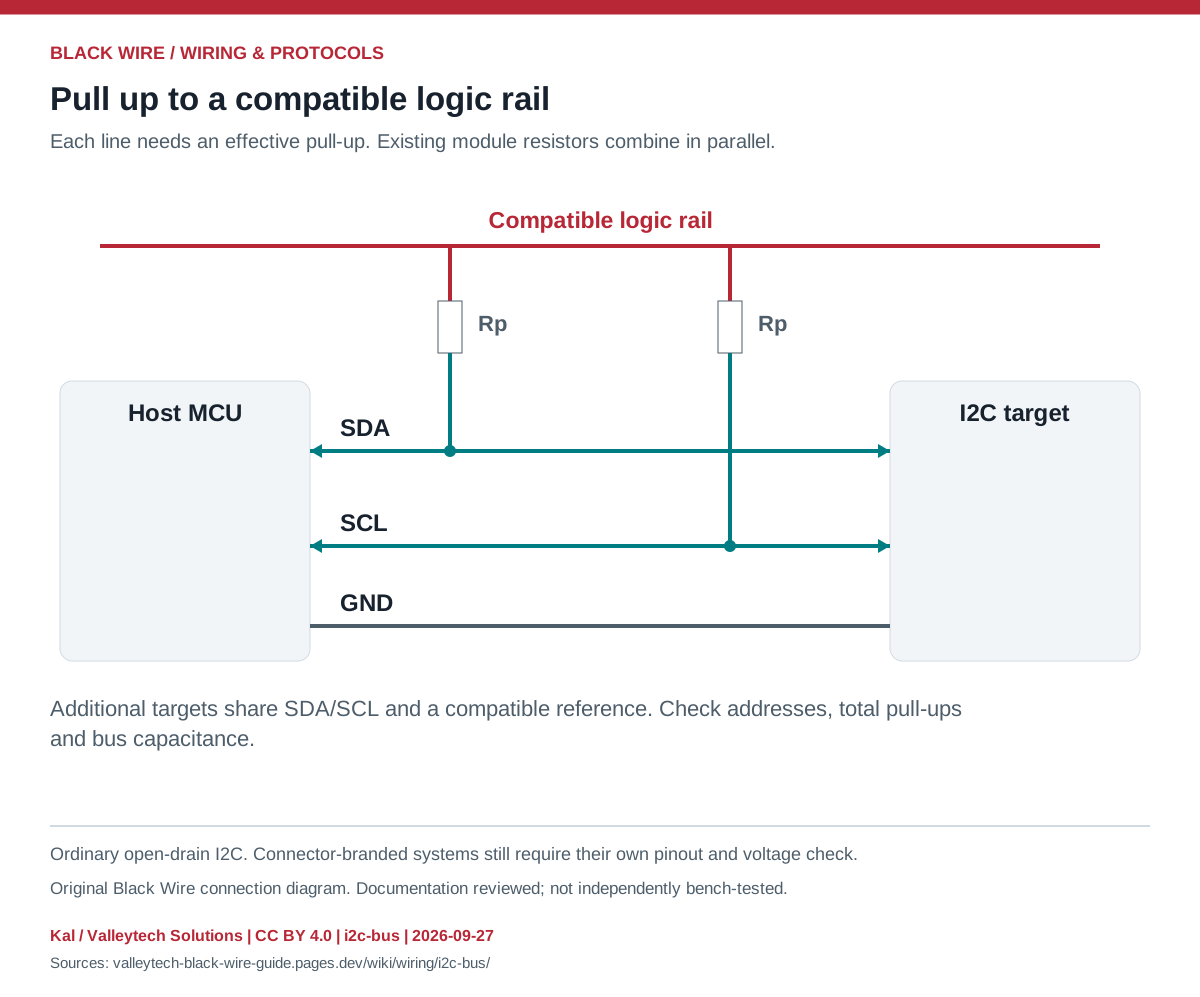
Devices share data and clock lines and release them high through pull-up resistors.
Connection reference
| Signal | Connection | Purpose |
|---|---|---|
| SDA | SDA on each device | Bidirectional data |
| SCL | SCL on each device | Clock; a target may stretch it |
| GND | Common reference | Non-isolated example |
| Pull-up rail | Compatible with every I/O | Not automatically the module power input |
Make the connection
- Check addresses for collisions and configure the documented bus speed.
- Determine the total pull-up resistance from all attached boards.
- Choose resistance using rise-time, capacitance and sink-current limits; 4.7 kohm is not universal.
Check before powering
- A 5 V pull-up can damage a non-tolerant 3.3 V input.
- Do not cross SDA and SCL. A detected address alone does not prove the correct device or power configuration.
Sources & review
Source documents inspected; independent electrical and bench review pending. Reviewed 2026-09-27.
- NXP: I2C specification, UM10204
SDA/SCL, open-drain bus, addressing and pull-up sizing · checked 2026-09-27
Original writing and diagram by Kal / Valleytech Solutions, CC BY 4.0. Manufacturer artwork and documentation retain their own rights. CC BY 4.0
Diagram fingerprint
a7b801ab586b24a37d9650a55c6f8fcb29dd7ae65d3d572c80e040b30eff0dce